Connecting schools is just the start: Lessons from rural Malawi
At unconnected.org, we hold a simple belief: Meaningful Internet For All.
Since late 2024 to end of Jan 2026, that belief has been put into practice in a pilot project in Malawi with the support of World Mobile that have helped to bring internet access to rural schools.
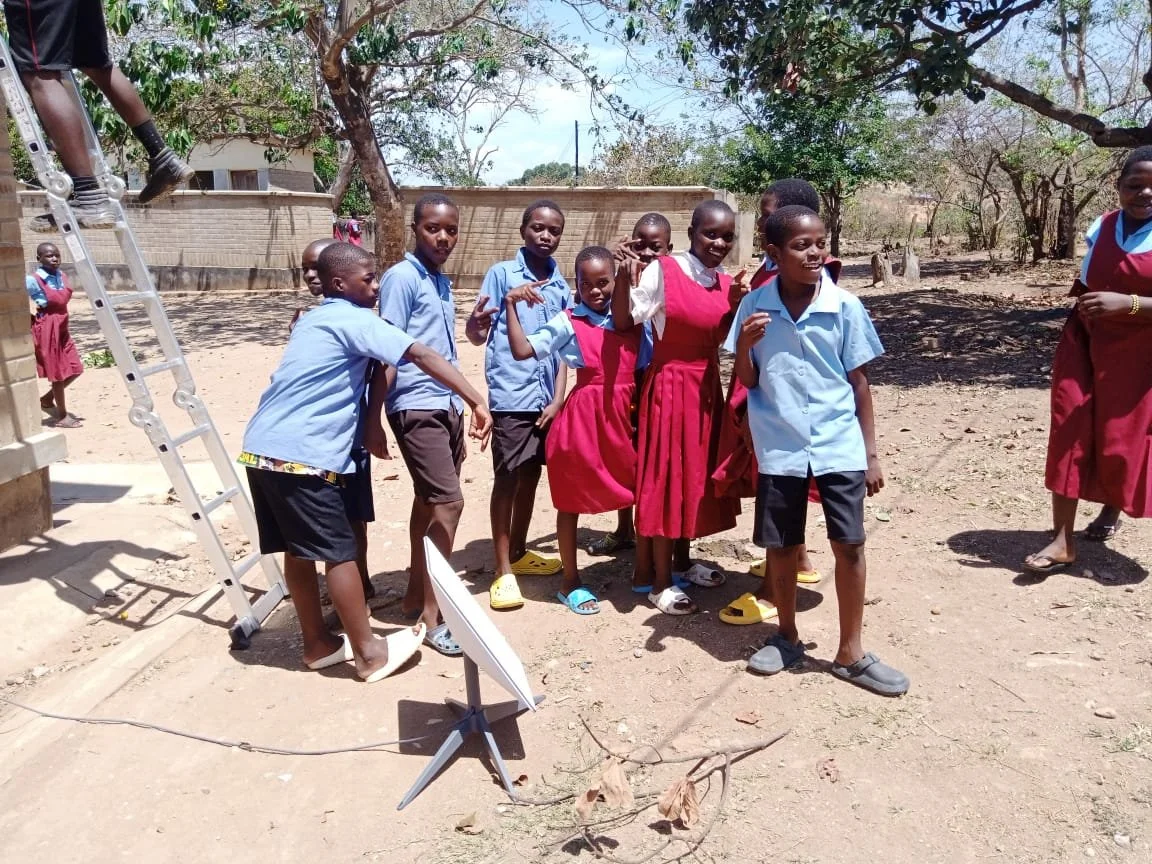
For many of these communities, this was the first time students, teachers, and families had reliable access to the internet. Classrooms were able to tap into online learning resources. Teachers explored new tools and content. Schools opened up public WiFi, allowing parents, farmers, and small business owners to get online too. In rural Malawi, the school is often the centre of community life, and connectivity strengthened that role.
What we learned along the way
This project was not without challenges. Not all schools remained online after the initial free period ended. That matters, and it’s something we’ve been very honest about internally and with our partners. But this is exactly where the real value of the project lies.
It gave us clear, real world insight into what works, what doesn’t, and what needs to change if school connectivity is going to be sustainable in markets like Malawi. Those lessons are now directly shaping how we design our models, partnerships, and funding structures going forward.
Impact work is rarely a straight line, especially in complex environments.
During the project, global funding dynamics shifted significantly. At the same time, Malawi introduced tuition free public schooling, a hugely positive move for families, but one that left schools with little or no budget to contribute towards ongoing connectivity costs as originally planned.
Progress slowed, but the work did not stop. Strong partnerships adapt, and that’s exactly what happened.
Partnership beyond connectivity
This initiative was never just about bandwidth or hardware.
Alongside World Mobile, we partnered with The Hardy Bunch, a US based nonprofit focused on getting devices, digital content, and hands on support directly into schools. Their work centred on practical outcomes, not just access, but the ability to actually use the internet in meaningful ways.
Digital literacy, including exposure to AI tools, is no longer optional. Without it, students risk being left behind. Together, we focused on real usage, real skills, and real learning.
Building for sustainability, not dependency
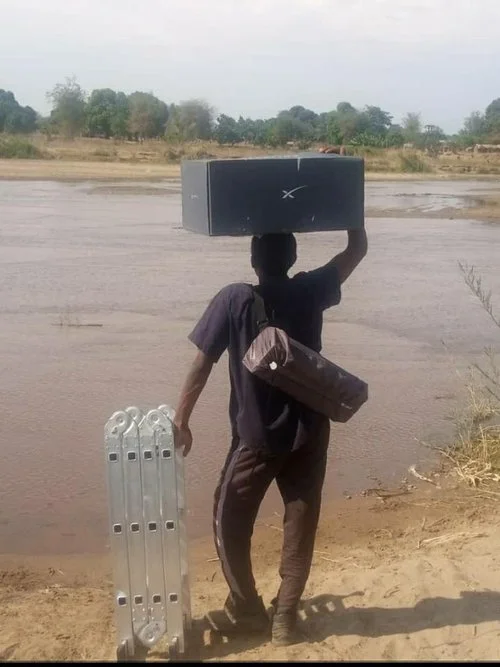
We worked and are continuing to work to test and perfect shared economy connectivity models. This project in particular combined low earth orbit satellite backhaul with fixed wireless access infrastructure and local operators.
The aim was straightforward: enable local ISPs such as Fast Networks to generate revenue, build viable businesses, and keep networks running long after initial sponsorship or grant funding ends.
Not every site reached that point, but the model itself has proven where it needs strengthening and where it can succeed with the right conditions.
Looking ahead
As we move into 2026, the focus is sharper.
We are refining deployments, prioritising schools and communities where connectivity delivers the strongest educational and economic return, and tightening the commercial model with local ISPs so fewer sites drop off after launch. There is no point doing pilots unless you review and learn from them and change based on those learnings.
Our focus has shifted to making sure everyone involved has clearer skin in the game from the start. Even small upfront investment from partners makes a real difference. It helps ensure projects are treated not as charity, but as a genuine investment in long term business models.
We work with some of the most entrepreneurial communities, and that needs to show in how projects are designed. The emphasis is on enabling viable businesses and creating a clear path to return on investment.
We’re not simply connecting schools. We’re empowering local partners to generate revenue by connecting the unconnected in markets that were previously out of reach.
Malawi remains a challenging market and also one of the highest impact opportunities. When a child connects for the first time, access to education, healthcare, financial services, and markets often follows quickly.
That’s why this remains a long term commitment for us.

Thank you, to our partners
We’re grateful to all partners in this project for backing this work. With funding, infrastructure, technology, and genuine on the ground collaboration.
Together, we didn’t just connect schools. We tested models, learned lessons, and laid the groundwork for more sustainable digital ecosystems.
As unconnected continues to expand globally, the experience in Malawi will directly inform how we deliver stronger, more resilient connectivity projects in the communities that need them most.
We’re just getting started.
To learn more about our partners for this project visit www.worldmobile.io and www.hardybunch.org