The Day Before Christmas
It was not meant to be a long call.
When Akon Deograce first reached out he wanted to explore if unconnected.org could support the expansion of his work in Nakivale Refugee Settlement. We are not yet active in Uganda, but we are exploring it as a future market. Conversations like these are a great way to understand more about how we can position us and support in new markets.
But this particular conversation stayed.
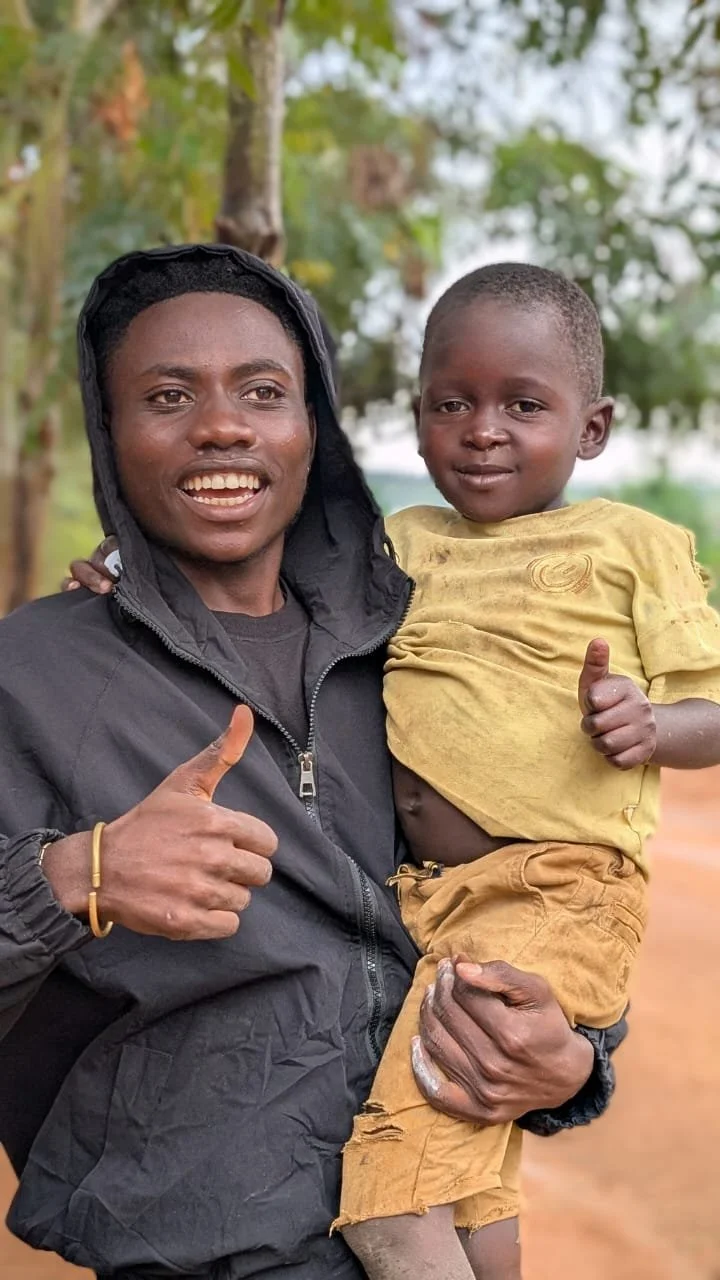
Akon is 24 years old. He is the Founder of Nakivale Young Talent Community, a refugee-led initiative focused on empowering youth, women, and children. He speaks about connectivity not as a luxury, but as a way to expanding horizons and enable a future for the youth he is working with day to day.
And then as we spoke about “why” he started the education centre, he told me about the “day before Christmas” and this story stuck with me, I asked if I could share it with you and he said yes. Not to show pity or make you feel sad for him but to show how experiences can shape the way we think and why we need to work harder to help, and to make a difference.
He was a child at the time, living in Democratic Republic of the Congo with his family. He had an older brother and a younger sister. That evening, like many others, was just a normal evening.
There had been shouting and gunfire outside before. It was not unusual. But that night, it came closer.
He stepped outside to see what was happening and found his grandparents. They didn’t explain. They didn’t need to. They told him to run.
“The bad people are coming.”
The family split in the chaos and they lost his sister. His parents and brother went back to look for his sister. He was told to wait.
The next day was Christmas. He had been given new clothes. He and his brother were meant to wear matching outfits.
He never got the chance, his family never came back.
His parents, his brothers, his sister were killed. The details are hard to write and harder to hear. His mother and young sister were also badly assaulted before they were killed. I remember thinking how and why can people be so evil, how can it live so much hatred inside someone that they can kill a whole family and also assault a baby in that way? I will never, ever be able to understand it.
He was the only one who survived.
He made it to Nakivale Refugee Settlement with the help of a woman he still speaks about with gratitude. He smiled when he mentioned her.
She is also a mother, “She gave me back my smile, it was broken,” he said.
It is a simple sentence. But it carries weight.
Life in the settlement was hard. There was no formal education system available to him. But there was someone who tried.
Classes were held under a tree.
He repeated this several times. Not as a complaint, but as a detail.
“We were learning under the tree.”
For four years, that was his classroom.
Later, he found an arts programme. It lasted a year before it stopped. So he started his own.
He called it Under the Tree.
There is something precise about that choice. A continuation of what he had known.
From there, things began to shift.
He applied for a grant. He received $4,000. It was not a large sum, but it was enough. Enough to build a small centre. Enough to create a physical space for learning, for creativity, for art, for structure.
Enough to start again, this time on his own terms.
Today, through Nakivale Young Talent Community, he has expanded that vision. The centre now includes connectivity. He is working on building mesh networks to connect the surrounding community.
Connectivity, he explains, is not just about being online. It is about access. To education, to information, to opportunity. To a different version of life than the one you were handed.
“It widens horizons,” he said.
In this line of work, I hear many stories.
Requests for connectivity come from all over the world, often tied to hard stories, to lack of access, to communities left behind. It is easy, over time, to categorise them. To place them into frameworks. To assess feasibility, scalability, return on investment and also honesty and motivation behind the people reaching out.
But sometimes, a story cuts through that.
This one did.
Not because it is the only story like this. It isn’t. There are many. Too many. But because it is one person, carrying something that could have ended everything, and instead building something that extends beyond himself.
There is a tendency, particularly in our sector, to focus on large-scale change. National strategies. Infrastructure rollouts. Policy shifts. These matter. They are necessary.
But there is another layer. One that is less visible, but equally important for the people in those communities.
Individuals like Akon, who are already doing the work. Who are not waiting for systems to catch up, but are building within the means they have.
The question, then, is not just how we fund connectivity at scale. It is how we identify and support people like this, ensuring that resources reach those who are already creating sustainable impact on the ground.
At unconnected.org, we are not yet operational in Uganda. But this conversation has accelerated that interest.
In the immediate term, we are supporting Akon through our connectFUNDING platform, helping him access grants and funding opportunities to expand his work. We are also exploring how we can work more closely with him as we look to enter the country.
It is not a solution. Not yet. But it is a start. And I am reaching out to you that are reading this. Can you help to support Akon with expanding the centre, provide infrastructure for connectivity, expansion and support, reach out to us and we will forward your contributions directly to Akon.
Akon’s story and others like this needs to be heard. Difficult, direct, and, in parts, uncomfortable.
But it also carries something else. Not optimism in the conventional sense, but continuation.
To take something that ended in greif and use it as a starting point for something that creates positive impact. Myself I have been there before, and that is why I am doing what I am doing today.
When the call ended, I sat with it for a while.
There is always a next meeting, a next email, a next decision. But this one stayed longer than most.
And I keep thinking about what he had said. About the clothes he never got to wear. About the classroom under the tree. About the centre he built from $4,000. About the network he is now trying to expand.
It is easy to talk about impact in numbers. In reach, in coverage, in scale.
But sometimes, it is one story that shifts something.
This one did.
This text is not AI generated and can include spelling mistakes and text issues.
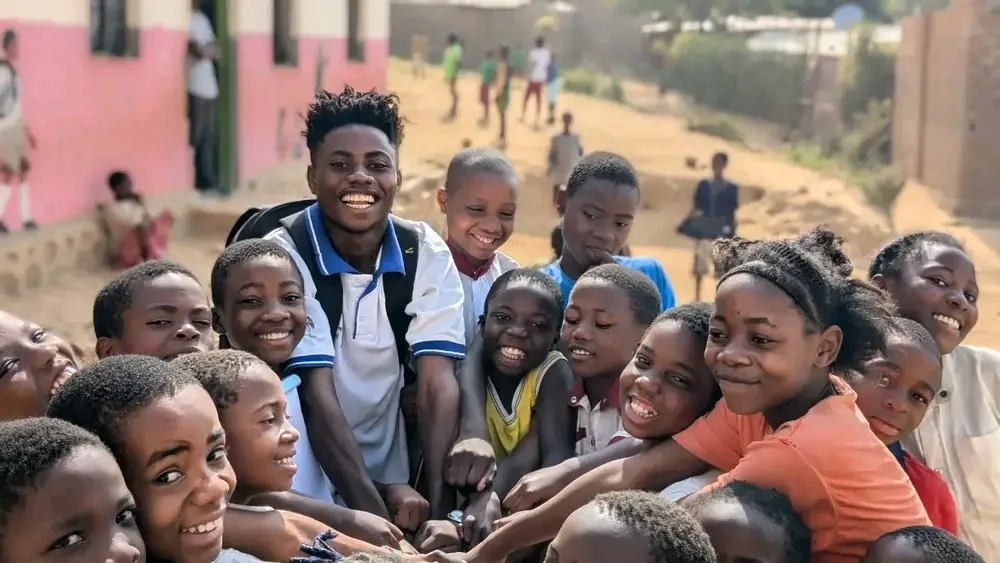
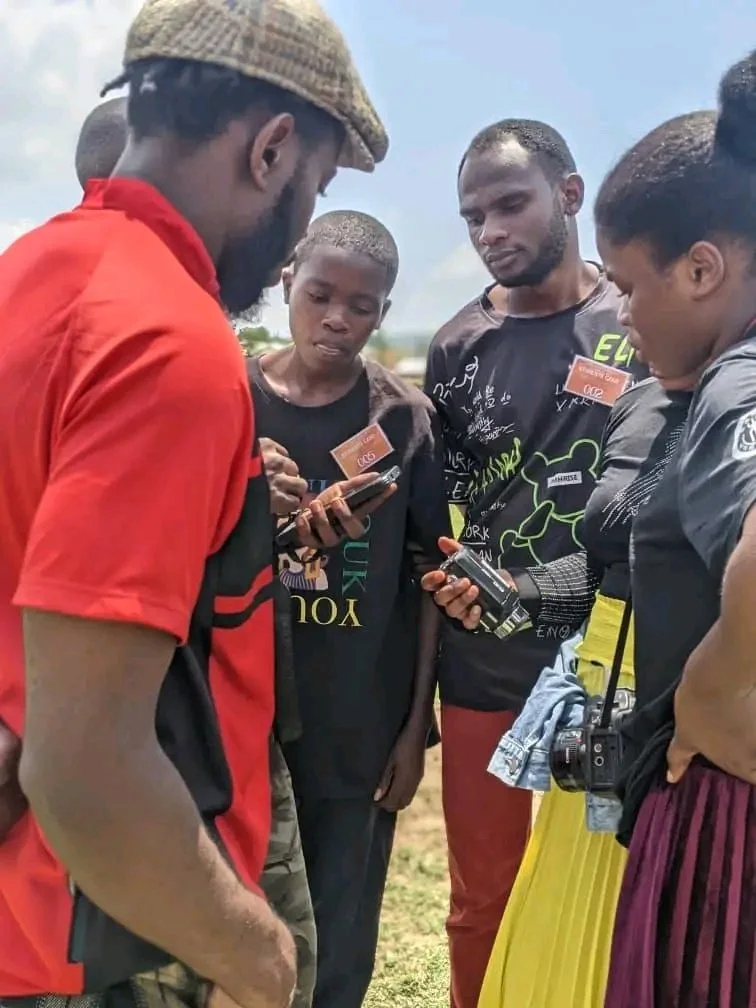
Akon and the kids at the centre
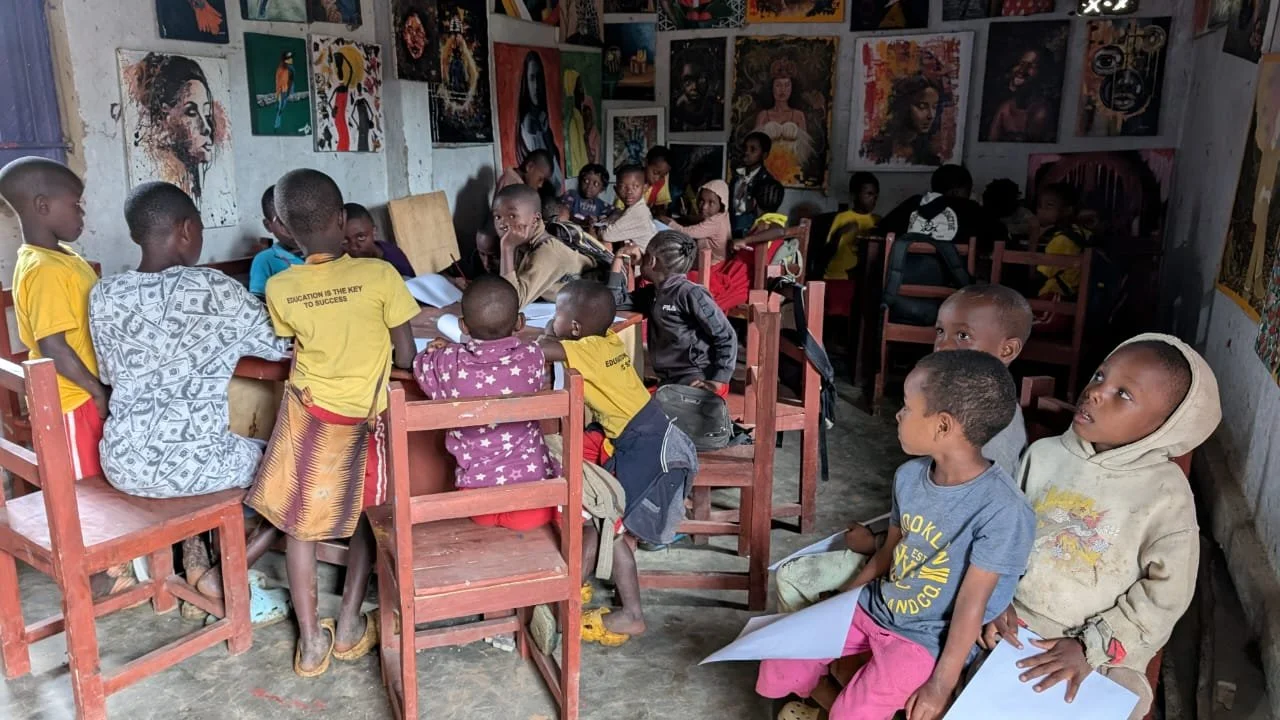
The children are learning art at the centre
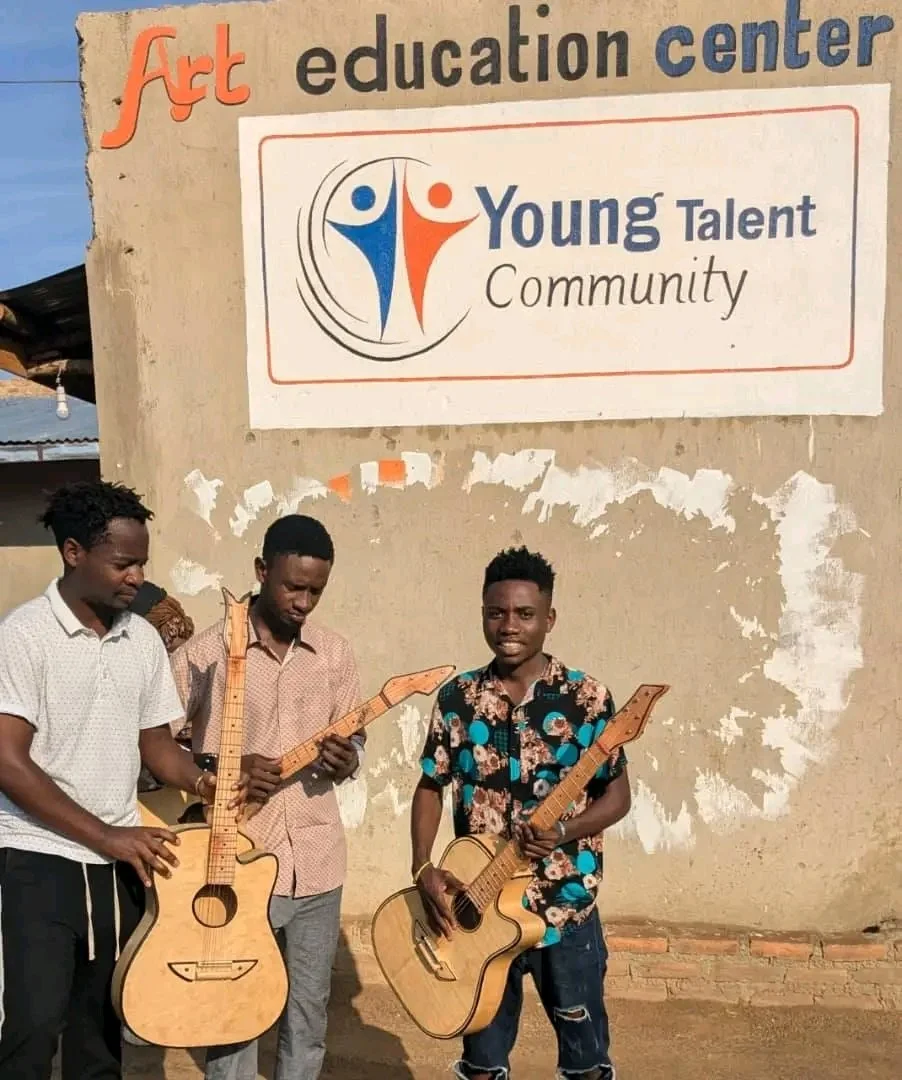
Akon outside of the art education centre he built using a small grant.