Unlocking the Power of “Last Mile” Digital Economies
Recently, GIDA, a term that stood for Geographically Isolated and Disadvantaged Areas, came to be - a metric originally used to describe public health resources or chronic lack thereof. Inferring, these may be far-flung barangays, remote islands, or rural communities - a sight so commonplace, one can easily picture.
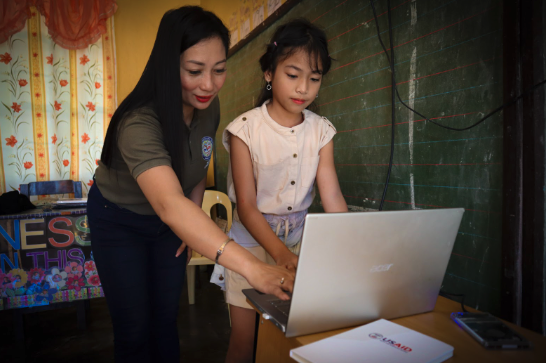
The term has been assimilated into the internet ecosystem, connoting unserved or underserved areas - words that we can vividly picture in our minds, yet formal definitions remain fleeting. Lack of fiber infrastructure, degraded or non-existent commercial telecommunications coverage, or unavailability of operator or service provider - or a combination of these are but some of the tell-tale signs that an area is digitally-challenged.
The Internet was introduced in the Philippines a little over three decades ago, on March 29, 1994. Since then, the telecommunications and information and communications technology (ICT) sector has likewise evolved, with digital infrastructure supporting the social media capital of the world, sustaining leadership in business processing industry, and streamlining of delivery of eGovernment services to the public. All these advancements flourished, yet today, the long list of GIDA locations including unconnected schools is a glaring reminder that much remains to be done - now, fast.
A student in a far-off island somewhere in the country has not heard of the Internet, nor has afforded the appropriate device, let alone has had the opportunity to use it to supplement traditional schooling and expand his learning outcomes.
Last year, 2025, the country saw a monumental move that would accelerate the shift for the Philippines to be digital-first, effectively lowering barriers to entry in offering Internet or data transmission services, and ending an era of outdated legislation stifling innovation. Republic Act No. 12234 or Konektadong Pinoy Act, abbreviated as KPA, became a law.

KPA traces its roots in 2016, when advocates called the shots for Open Access, a drive to liberalize various segments of the telecommunications and the data transmission industry - about the same time when the Department of Information and Communications Technology, the national government agency focused on the ICT sector, was newly established.
KPA’s passage signalled to the world stage that the Philippines is serious in addressing systemic gaps, and locked on to becoming an economic powerhouse enabled by digital connectivity and robust infrastructure. After all, at 110 million strong and growing, the Filipino populace account for the region's major Internet users base, albeit, a huge percentage is still unconnected. As such, the industry is playing catch-up with its ASEAN neighbors.
Significant developments transpired as well before Konektadong Pinoy was enacted - there was the Selection of the New Major Player in the Public Telecommunications Market, breaking the market duopoly with the government introducing a third player; the Expansion of Provision of Internet Through Inclusive Access to Satellite, creating for an incentivizing environment for satellite service providers and operators to set-up shop in the Philippines; and the Streamlining of the Permitting Process for the Construction of Telecommunications and Internet Infrastructure, enabling the nationwide roll out of shared tower infrastructure.
These were all contributory to the over-all reform environment that the ICT sector needed at a critical juncture when demand for better services was at an all-time high. But how did KPA address the country’s systemic peculiarities.
By virtue of the provisions set forth in KPA, the law removed the need to secure legislative franchise for prospective Data Transmission Industry Participants (DTIP), entities that intend to build, operate, maintain and offer Internet services as a form of economic activity, a requirement that used to be the single most difficult to hurdle.
The law also introduced performance and cybersecurity standards among DTIPs, no longer an afterthought, anchored on consumer welfare and protection. Additionally, infrastructure sharing is a core feature of KPA. It also provided for the issuance of Spectrum Management Policy Framework (SMPF) which is meant to support the industry regulator in the performance of its mandate, with a key imperative grounded on the efficient use of spectrum as a national resource.
KPA formally acknowledged Community-Based Networks - entities organized to offer Internet within localities, especially GIDA, taking in the form of social enterprises, hyperlocal entrepreneurs or social-mission driven commercial organizations, including non-profits, among others. This empowers micro and small businesses to legally deliver Internet services not only to rural households, but also to schools, health units and disaster centers, by simply registering with the regulator, instead of having to go through a very restrictive process. The promise? Eligibilities and requirements were simplified; green lanes and streamlined approvals take effect to support last-mile connectivity; and, existing players grandfathered, while new certifications are timely released.

Both local and foreign players are expected to take part in connecting the unconnected, of bringing digital equity to GIDA, and in making meaningful Internet accessible and affordable to the Filipino population. Consumers will benefit from enhanced market competition - rendering Internet services with better rates, improved quality and hopefully universal.
For that unconnected student nonetheless, Konektadong Pinoy Act is a very powerful tool to avail of his right to access the Internet, bridging the digital gap, and making himself ready as the world embraces hyperconnectivity, and leaps toward artificial intelligence.
The law’s implementation coincides at a time when key public investments are in full swing, such as the Free Internet Access in Public Places, Bayanihan SIM Cards and the National Broadband Program, magnifying the potential of connectivity in improving the lives of Filipinos particularly those in the farthest of barangays, harnessing the data traffic of users that are newly connected, and championing community-based connectivity initiatives.
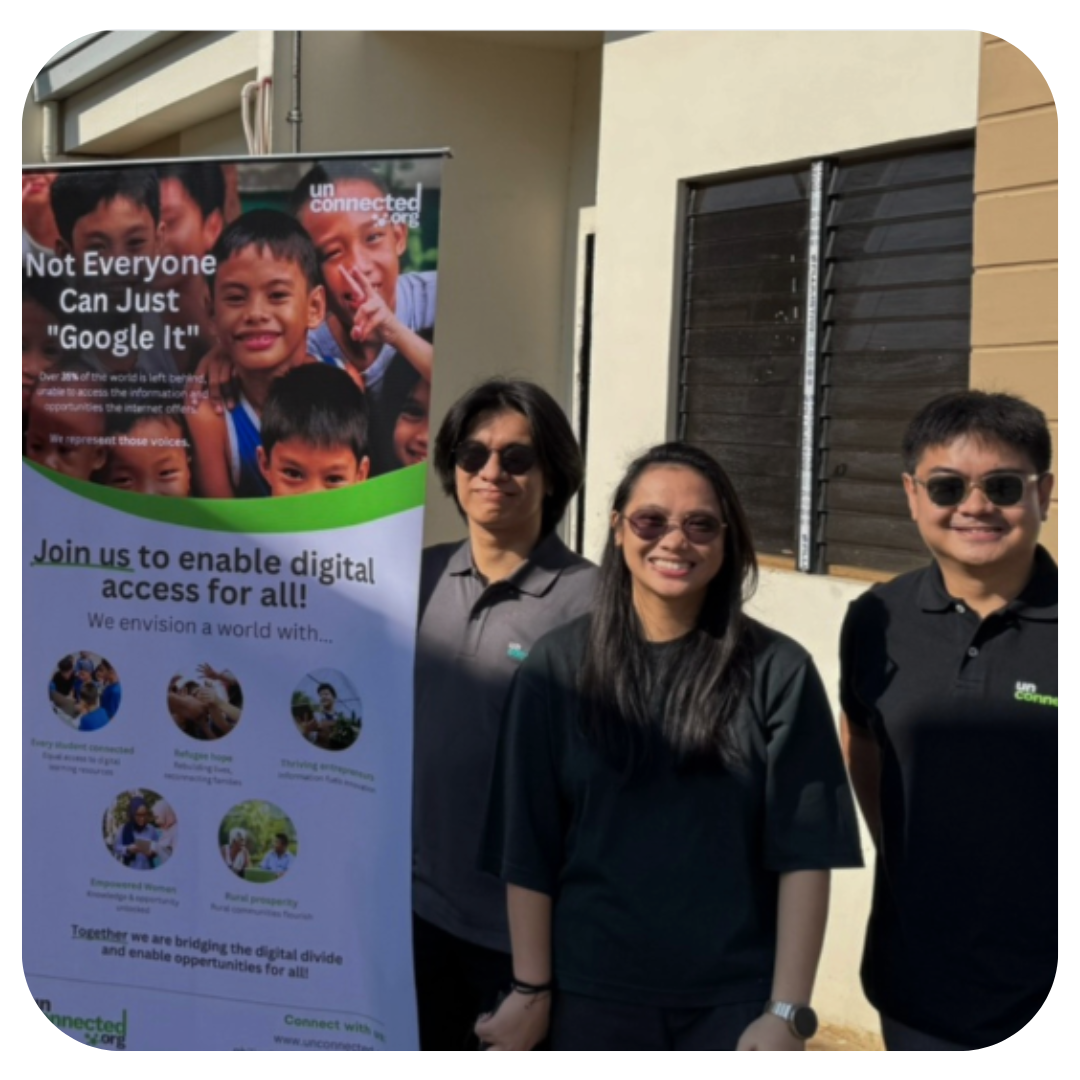
The true measure of the benefits, advantages and impact of KPA are incumbent on democratizing access to the Internet by getting rural communities connected, enabling digital learning for students by serving remote schools, and creating online opportunities where there was previously none.
KPA is not merely a reform, it is the bridge that gets us where we want to be - a nation trailblazing innovation, its citizens digitally-empowered, and whose GIDA barangays, islands and communities are no longer just the “last mile” but the new frontier in cultivating a thriving digital economy.
Join us as we continue getting more Filipinos online, and advocating for better Internet in the Philippines through Konektadong Pinoy Act’s effective implementation.
BENJZ GERARD M. SEVILLA
Country Manager, Philippines
